


Your heart pumps continuously without asking for attention, yet cardiovascular care is often ignored until an abnormal lab report or medical scare forces the issue. Protecting your heart health doesn’t require extreme diets, expensive gym memberships, or overnight lifestyle overhauls—it is built on small, consistent decisions repeated over time.
Why Early Prevention Matters
Cardiovascular risk factors often develop quietly without obvious warning signs. Blood pressure can elevate, cholesterol profiles can shift, and blood sugar can creep upward while you feel completely fine.
- Silent Progression: Conditions like hypertension and high cholesterol frequently cause no symptoms until a major event, such as a heart attack or stroke, occurs.
- Preventive Maintenance: Treat heart care like maintaining a vehicle. You do not wait for engine failure to check the oil, brakes, and tires.
- Age Is Not Immunity: Cardiovascular disease contributes significantly to premature deaths before age 70. Healthy habits have no minimum starting age.
Rethinking Your Plate
A heart-friendly diet is a long-term pattern of eating, not a temporary six-week restriction. Focus on real, minimally processed foods that fit naturally into your everyday kitchen.
Rebalancing the Plate
Instead of building meals around large portions of refined carbohydrates, start by filling your plate with vegetables, protein, and fiber.
| Meal Focus | Traditional Approach | Heart-Conscious Shift |
| Primary Base | Heavy portion of refined rice or rotis | Mixed vegetables, salads, and leafy greens |
| Protein Source | Secondary side dish | Central component (dals, legumes, curd, paneer, lean protein) |
| Carbohydrate | Uncontrolled quantity | Balanced serving of whole grains or pulses |
| Flavoring | High sodium, heavy butter/oil | Herbs, spices, and moderate healthy cooking oils |
Core Dietary Principles
- Reduce Hidden Sodium: Most excess salt comes from packaged snacks, sauces, instant foods, and pickles. Taste food before adding salt, and rely on natural herbs and spices for flavor.
- Maximize Plant Diversity: Rotate seasonal vegetables (spinach, gourds, carrots, cruciferous veggies) and whole fruits. Varied colors signal a broader range of nutrients.
- Ignore “Miracle Foods”: No single food, supplement, or green drink can undo an unsupportive diet. Sustainable patterns matter more than individual ingredients.
Movement and Daily Activity
Physical activity does not require exhausting daily workouts to be effective. The primary goal is consistent movement paired with reducing prolonged sedentary time.
- Target 150 Minutes: World Health Organization guidelines recommend at least 150 minutes of moderate-intensity physical activity (like brisk walking) per week—roughly 30 minutes, 5 days a week.
- Start Small: If you are currently inactive, break movement into short walks after meals, taking the stairs, or pacing during phone calls.
- Break Up Sitting: Working out for 30 minutes does not fully offset sitting for 10 hours continuously. Schedule micro-breaks throughout the day to stand, stretch, and walk around.
Essential Metrics and Lifestyle Anchors
Lifestyle choices work in tandem with regular clinical monitoring to protect long-term cardiovascular health.
| Know Your Numbers | Lifestyle Pillars |
| Blood Pressure | 7-9 Hours Quality Sleep |
| Complete Lipid Profile | Stress Response Control |
| Fasting Blood Sugar/HbA1c | Total Tobacco Avoidance |
| Body Composition & Weight | Environmental Awareness |
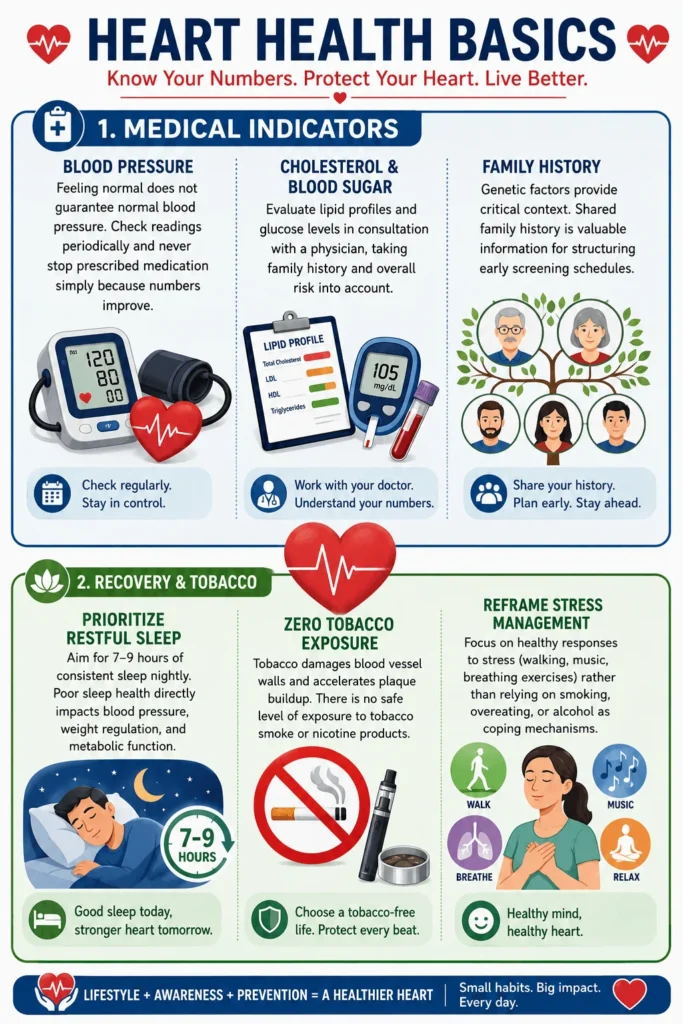
1. Medical Indicators
- Blood Pressure: Feeling normal does not guarantee normal blood pressure. Check readings periodically and never stop prescribed medication simply because numbers improve.
- Cholesterol & Blood Sugar: Evaluate lipid profiles and glucose levels in consultation with a physician, taking family history and overall risk into account.
- Family History: Genetic factors provide critical context. Shared family history is valuable information for structuring early screening schedules.
2. Recovery & Tobacco
- Prioritize Restful Sleep: Aim for 7–9 hours of consistent sleep nightly. Poor sleep health directly impacts blood pressure, weight regulation, and metabolic function.
- Zero Tobacco Exposure: Tobacco damages blood vessel walls and accelerates plaque buildup. There is no safe level of exposure to tobacco smoke or nicotine products.
- Reframe Stress Management: Focus on healthy responses to stress (walking, music, breathing exercises) rather than relying on smoking, overeating, or alcohol as coping mechanisms.
The 24-Hour Heart Blueprint for Good Heart Health
Establishing a daily default routine reduces decision fatigue and makes healthy habits automatic.
| Time of Day | Recommended Focus |
| Morning | Start with hydration, a balanced breakfast, and light movement rather than immediate stress or tobacco. |
| Workday | Take short movement breaks every hour, keep water accessible, and walk during calls. |
| Lunch | Build the plate around vegetables, legumes or protein, and whole-grain carbohydrates. |
| Evening | Engage in enjoyable physical activity (walking, cycling, sports) to unwind from work stress. |
| Night | Disconnect from screens 60 minutes before bed, keep the room cool and dark, and aim for 7–9 hours of sleep. |
The 30-Day Action Plan
Turn information into sustainable habits by focusing on one key area each week.
- Week 1: Increase Movement — Walk 30 minutes daily and set timers to break up prolonged desk sitting.
- Week 2: Upgrade Your Nutrition — Add an extra portion of vegetables to lunch and dinner; swap packaged snacks for whole fruits or nuts.
- Week 3: Protect Recovery — Standardize your sleep schedule and replace late-night screen time with a relaxing evening routine.
- Week 4: Check Your Metrics — Schedule a checkup to test blood pressure, blood glucose, and cholesterol levels with a doctor.
Critical Red Flags
Warning Signs Requiring Immediate Emergency Care
Do not ignore or wait out symptoms indicative of a cardiovascular event:
- Pressure, tightness, or squeezing discomfort in the center of the chest
- Pain or numbness radiating to the arm, back, neck, jaw, or stomach
- Shortness of breath, sudden cold sweats, unexplained nausea, or lightheadedness
