

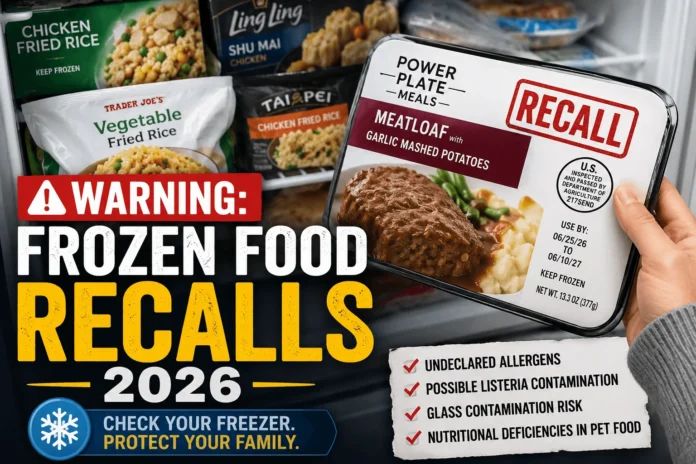
Several major frozen food recalls have been announced across the United States in 2026, affecting frozen meals, rice products, dumplings, dairy items, and pet food. Consumers are advised to stop using affected products immediately and either discard them or return them to the retailer for a refund. Some recalls involve potentially serious risks, including undeclared allergens, possible glass contamination, and bacterial contamination.
Why Frozen Food Recalls Matter
Food recalls are issued when a product may pose a health risk to consumers. These risks can range from undeclared allergens to contamination by bacteria or foreign materials. For vulnerable groups—including children, seniors, pregnant women, and people with food allergies—even a small contamination issue can lead to serious health consequences. In 2026, several high-profile recalls have impacted millions of pounds of frozen food products distributed nationwide.
Latest Frozen Food Recalls in June 2026
1. Power Plate Meals Frozen Meatloaf Recall
The most recent major frozen food recall involves Power Plate Meals, LLC.
Why Was It Recalled?
The company recalled approximately 5,795 pounds of frozen meatloaf products because they contain soy, a major food allergen, that was not declared on the product label. For individuals with soy allergies, consuming the product could trigger serious or potentially life-threatening allergic reactions.
Product Details
| Information | Details |
| Product | Frozen Meatloaf with Garlic Mashed Potatoes |
| Company | Power Plate Meals, LLC |
| Recall Date | June 18, 2026 |
| Hazard | Undeclared Soy Allergen |
| Establishment Number | 217SEND |
| Distribution Area | Minnesota, North Dakota, South Dakota |
Check Your Packaging
Look for:
- Vacuum-sealed trays
- “USE BY” dates between June 25, 2026 and June 10, 2027
- Establishment number 217SEND inside the USDA inspection mark
Consumers should not consume these meals and should dispose of them or return them for a refund.
2. Clover Hill Dairy Soft Cheese Recall
Clover Hill Dairy recalled certain soft ricotta and requeson cheese products due to concerns about possible Listeria monocytogenes contamination.
Why Listeria Is Dangerous
Listeria can cause serious infections, especially among:
- Pregnant women
- Newborns
- Older adults
- Individuals with weakened immune systems
Symptoms may include fever, muscle aches, nausea, and gastrointestinal illness.
3. Steve’s Real Food Freeze-Dried Chicken Recipe Recall
Go Raw LLC, operating under the Steve’s Real Food brand, recalled certain freeze-dried chicken recipe products after discovering insufficient levels of thiamine (Vitamin B1).
Thiamine deficiency can lead to serious health problems in pets when consumed over extended periods.
The Largest Frozen Food Recall of 2026: Ajinomoto’s Massive Recall Expansion
One of the biggest food safety events of the year involved Ajinomoto Foods North America.
What Happened?
The company expanded a recall involving approximately 37 million pounds of frozen products after receiving multiple consumer complaints regarding possible glass fragments in food products. Investigators later identified carrots supplied as an ingredient as the likely contamination source.
Brands Affected
The recall included products sold under several well-known brands:
- Ajinomoto
- Kroger
- Ling Ling
- Tai Pei
- Trader Joe’s
Affected products included:
- Chicken Fried Rice
- Pork Fried Rice
- Vegetable Fried Rice
- Ramen Products
- Shu Mai Dumplings
- Ready-to-Eat Frozen Meals
Identification Numbers to Check
Consumers should inspect packaging for these establishment numbers:
- P-18356
- P-18356B
- P-47971
Trader Joe’s Products Included
Several Trader Joe’s frozen favorites were affected, including:
- Chicken Fried Rice
- Vegetable Fried Rice
- Japanese Style Fried Rice
- Chicken Shu Mai
Some products carried best-by dates extending into 2027.
Public Health Alerts Issued During 2026
In addition to formal recalls, federal agencies issued several public health alerts regarding meat and poultry products containing ingredients linked to potential contamination concerns.
Unlike recalls, public health alerts may be issued when affected products are no longer available for sale but could still be present in consumers’ homes.
How to Check if a Frozen Product Has Been Recalled
Follow these steps:
- Locate the product package.
- Find the lot code, establishment number, or best-by date.
- Compare the information with official recall announcements.
- Do not taste or test suspected products.
- Dispose of affected items safely or return them to the retailer.
Quick Recall Verification Checklist
| Check | What to Look For |
| Product Name | Exact recalled item |
| Brand | Matching manufacturer |
| Date Code | Use By / Best By dates |
| Establishment Number | USDA or FDA identifiers |
| Recall Notice | Active recall announcement |
Official Sources for Recall Updates
Consumers should rely on government databases rather than social media rumors.
USDA Food Safety and Inspection Service (FSIS)
Best source for:
- Meat products
- Poultry products
- Processed egg products
FDA Recall Database
Best source for:
- Dairy products
- Frozen vegetables
- Seafood
- Prepared foods
- Packaged consumer products
FoodSafety.gov
Provides a centralized listing of major recalls and food safety alerts from multiple federal agencies.
For official information, visit:
Additional Internal Linking Opportunities
To strengthen topical authority and user engagement, naturally link this article to:
- Food Recall News Archive
- FDA Food Safety Updates
- USDA Recall Alerts Explained
- How to Read Food Product Labels
- Food Safety Tips for Families
Use descriptive anchor text rather than generic phrases like “click here.”
Key Takeaways
The most significant frozen food recalls of 2026 include the Power Plate Meals meatloaf recall for undeclared soy and the massive Ajinomoto recall involving nearly 37 million pounds of frozen products due to possible glass contamination. Consumers should regularly inspect freezer contents, verify package codes, and follow official recall announcements to protect their households.
