

2027 Economy Outlook: Introduction
As corporate executives, small enterprise operators, and institutional investors formulate their medium-term strategic visions, the year 2027 has emerged as a defining horizon. The global marketplace has spent the earlier part of the decade navigating sharp cyclical shocks, post-pandemic inflation spikes, aggressive central bank tightening, and rapid geopolitical reconfigurations. However, the economic landscape moving toward 2027 represents something far more profound than temporary cyclical normalization: it marks the dawn of a structurally altered macroeconomic baseline.
Industry leaders are realizing that operational blueprints engineered for the low-interest, hyper-globalized conditions of the previous decade no longer function effectively. The next several years demand a recalibrated operational philosophy—one that balances technological capital expenditure against tight labor constraints, hedges against fragmented global trade lanes, and captures shifting consumer demand. Navigating these transformations requires unpacking the core economic drivers shaping corporate planning through 2027.
The Cost of Capital: Adapting to Structural Higher-for-Longer Realities
Perhaps the most decisive shift anchoring 2027 projections is the permanent departure from zero-interest-rate policy (ZIRP). While central banks across advanced economies have completed their aggressive rate-hiking cycles, the anticipated return to near-zero borrowing costs has vanished. Structural inflationary pressures—ranging from the global green energy transition to the ongoing expense of supply-chain redundancies—mean that real interest rates are settling well above post-2008 historical averages.
For executive teams, this structural shift alters internal hurdle rates and investment horizons. Cheap leverage can no longer mask operational inefficiencies. Moving into 2027, businesses must focus on organic free cash flow generation, prudent balance sheet management, and disciplined capital expenditure. Mergers and acquisitions will increasingly emphasize immediate accretive value and hard cost synergies over speculative top-line expansion, rewarding businesses that master operational execution over financial engineering.
Demographic Constraints and the Deep Automation Mandate
Workforce dynamics represent another structural transformation defining the 2027 outlook. Across the United States, Europe, and parts of East Asia, demographic aging is accelerating, shrinking the pool of available labor in key sectors such as precision manufacturing, healthcare, logistics, and skilled trades. Unlike cyclical labor shortages, this trend cannot be solved through wage competition alone.
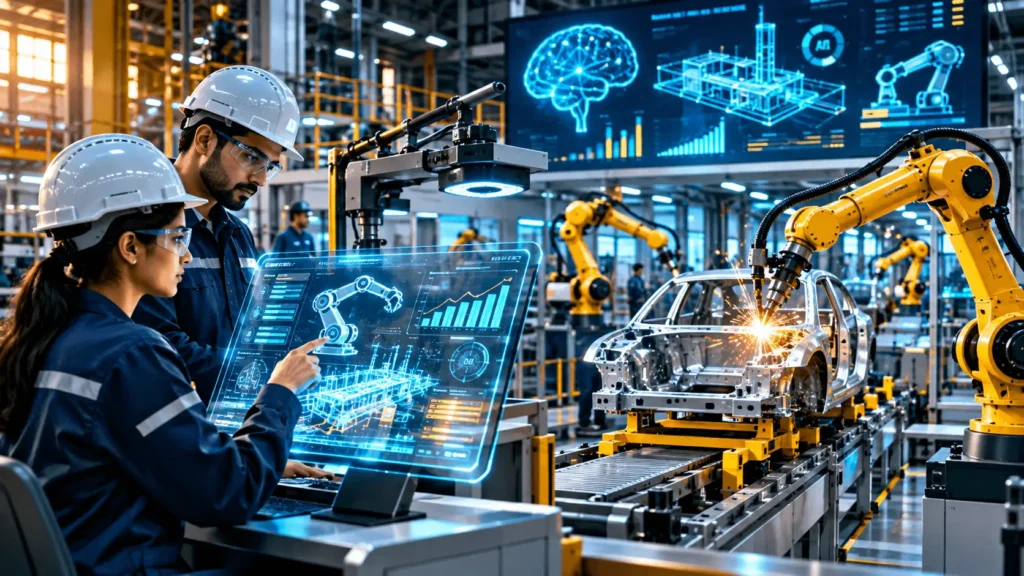
Consequently, the drive toward automation has shifted from an experimental venture into an existential operational mandate. By 2027, enterprise investment in artificial intelligence, computer vision, and autonomous machinery is projected to move beyond pilot phases into core production workflows. This transition will require strategic adjustments:
- Upgrading Cognitive Infrastructure: Deploying predictive analytics and workflow automation to eliminate bureaucratic overhead and maintain output despite static headcount.
- Workforce Reskilling as Capex: Treating ongoing employee education as essential balance sheet capital rather than a discretionary human resources expense.
- Decentralized Knowledge Capture: Preserving critical organizational memory as baby-boom cohorts accelerate their formal retirement.
Cultural Shifts and Emerging Discretionary Patterns
Macroeconomic shifts inevitably filter down to consumer psychology. Spending patterns heading into 2027 illustrate an electorate of consumers that is both value-conscious and emotionally driven. Prolonged housing affordability pressures and cumulative inflation have squeezed baseline discretionary income, forcing consumers to scrutinize mid-tier commodities while selectively splurging on high-conviction experiences and culturally resonant products.
Businesses that fail to stand out risk obsolescence as traditional brand loyalty erodes. In creative and consumer-facing sectors, the marketplace is rewarding daring, culturally distinct storytelling that defies generic algorithmic production. This dynamic is evident across global media and entertainment trends, such as The Nayi Naveli Effect: Inside the High-Concept Hindi Release Shaking Up 2026 Cinema, where market disruption was achieved by rejecting conventional tropes in favor of bold, authentic thematic narratives. For commercial enterprises across retail, leisure, and media, the lesson is clear: generic offerings will struggle to survive in an era where consumers demand uncompromising value and genuine identity.
Supply Chain Architecture: Moving from Just-in-Time to Just-in-Case
The geopolitical consensus underpinning frictionless global commerce has fragmented into competing regional economic blocs. Between now and 2027, cross-border corporate strategy will be heavily influenced by trade realignments, industrial subsidies like the CHIPS and Science Act, and carbon border adjustments.
Modern supply chains are evolving from purely cost-optimized, single-source networks into resilient, multi-node ecosystems. Nearshoring to geographic neighbors and “friendshoring” within allied regulatory frameworks will reach operational maturity by 2027. While building dual manufacturing hubs and localized logistics networks requires substantial upfront investment, decision-makers recognize that systemic resilience far outweighs the catastrophic cost of unexpected supply disruptions.
Energy Transition: Managing Capital Realities
The transition toward decarbonization is moving past ideological proclamations and into the arena of hard capital allocation and regulatory compliance. Heading toward 2027, industrial operators face increasing scrutiny over Scope 1, 2, and 3 emissions from both institutional lenders and corporate supply partners. At the same time, the surge in global computational demand—fueled by expanding AI data centers—is placing historic pressure on power grids.
Forward-thinking organizations are responding by treating energy security as a central competitive capability. On-site generation, enterprise power purchase agreements (PPAs), and advanced energy storage systems are becoming standard components of facility development. Companies that manage their power exposure efficiently will safeguard their operations against volatile municipal tariff structures and gain a decisive edge over less prepared competitors.
India’s Economic Outlook for 2027: Opportunities for Businesses and Investors
India is entering 2027 with a distinctive position in the evolving global economic landscape. As multinational corporations reassess their manufacturing footprints and diversify supply chains, the country is increasingly positioned as an important destination for investment, production, and digital innovation. Its expanding domestic market, infrastructure development, digital public infrastructure, and growing technology ecosystem provide several potential avenues for sustained economic expansion.
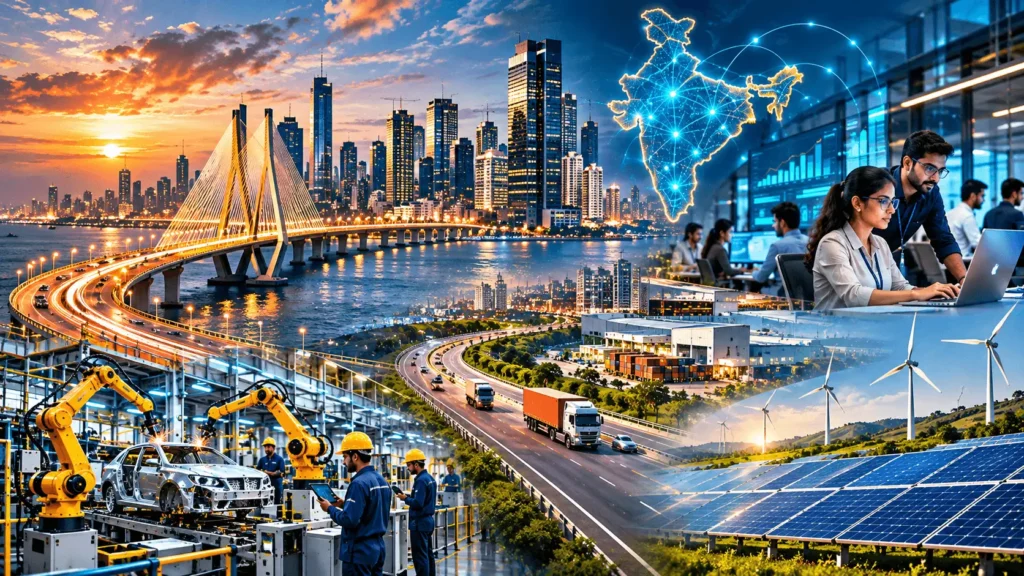
One of India’s most significant advantages is its combination of domestic consumption and increasing integration into global manufacturing networks. Government initiatives such as Make in India and the Production Linked Incentive (PLI) schemes are intended to strengthen domestic manufacturing capabilities across sectors including electronics, pharmaceuticals, automobiles, and renewable energy. As businesses seek alternatives to concentrated manufacturing hubs, India’s industrial ecosystem could benefit from these global realignments. However, realizing this opportunity will depend on improving logistics efficiency, workforce skills, regulatory predictability, and the competitiveness of domestic suppliers.
Digital Transformation and the AI Opportunity
India’s digital economy is becoming an increasingly important contributor to business productivity and innovation. The expansion of digital payment infrastructure, cloud computing, fintech platforms, and enterprise software is creating opportunities for businesses of different sizes. By 2027, artificial intelligence adoption could further accelerate this transformation, particularly in banking, healthcare, education, retail, agriculture, and customer service.
For small and medium-sized enterprises (SMEs), affordable AI-powered tools offer opportunities to automate administrative processes, improve customer engagement, optimize inventory, and make more informed commercial decisions. At the same time, businesses will need to address data protection, cybersecurity, digital infrastructure, and employee reskilling to ensure that technological adoption produces sustainable returns.
Infrastructure, Renewable Energy, and Industrial Expansion
Infrastructure investment is another important pillar of India’s medium-term growth prospects. Improvements in highways, dedicated freight corridors, ports, rail connectivity, industrial parks, and logistics infrastructure can reduce transportation costs and improve the efficiency of domestic supply chains. These developments could strengthen India’s attractiveness as a manufacturing and distribution base for both domestic enterprises and international corporations.
The energy transition also presents significant opportunities. Expanding solar and wind capacity, battery storage, green hydrogen initiatives, and electric mobility could create new investment opportunities across manufacturing, energy services, and supporting industries. Nevertheless, grid modernization, energy storage costs, financing requirements, and reliable power distribution remain important challenges.
Consumer Demand and the Expanding Domestic Market
India’s large population, urbanization, increasing digital participation, and evolving household consumption patterns offer businesses access to a substantial domestic market. Demand for financial services, healthcare, education, consumer technology, organized retail, and convenient digital services is likely to remain an important area of commercial interest.
However, market opportunities should not be confused with uniform purchasing power. Businesses must account for differences in income, regional preferences, price sensitivity, and access to services. Companies that combine affordable pricing with localized products and reliable customer experiences may be better positioned to capture demand across India’s diverse consumer segments.
The Strategic Priorities for Indian Businesses in 2027
For Indian enterprises, preparing for the 2027 economy will involve balancing expansion with financial discipline. Small businesses and large corporations alike should prioritize:
- Technology-led productivity: Adopt practical AI, automation, and digital systems that improve efficiency and reduce operating costs.
- Manufacturing competitiveness: Strengthen quality standards, supplier relationships, and operational capabilities to participate in domestic and international supply chains.
- Financial resilience: Maintain disciplined borrowing, healthy working capital, and sufficient liquidity to withstand market uncertainty.
- Workforce development: Invest in digital literacy, technical education, and continuous employee reskilling.
- Sustainable operations: Improve energy efficiency and evaluate renewable energy solutions to manage long-term operating costs.
India’s economic trajectory in 2027 will not be determined by growth opportunities alone. The ability to translate demographic advantages, digital infrastructure, manufacturing investment, and domestic demand into higher productivity and sustainable business performance will be equally important. For companies willing to invest strategically and adapt to changing market conditions, India could represent one of the more compelling growth opportunities in the evolving global economy.
Building Resilience for the 2027 Marketplace
Thriving in the 2027 economic landscape requires leaders to make tough strategic trade-offs today. Surviving and expanding amid structural capital costs, demographic changes, and fragmented supply networks means ditching complacency and focusing on core fundamentals.
Enterprises must rigorously stress-test their balance sheets against sustained borrowing costs, deploy automation to offset structural talent deficits, and deliver unique, uncompromising value to selective consumers. The 2027 economy will not favor passive players waiting for a return to past economic conditions. Instead, it will reward proactive leaders who design adaptable, resilient organizations ready to navigate the structural realities of the decade ahead.
