

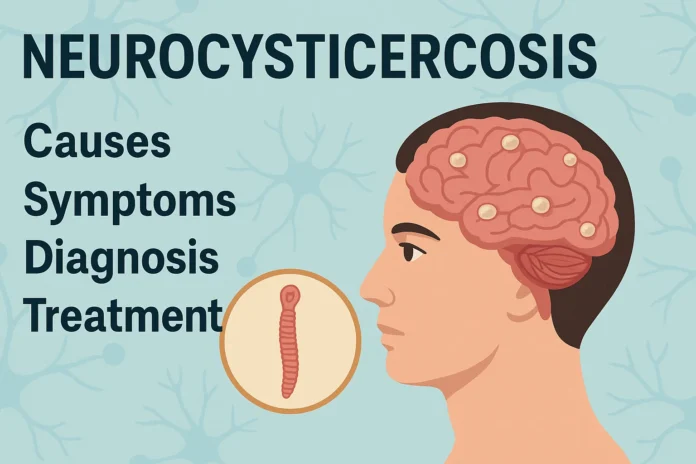
Neurocysticercosis: Introduction
Neurocysticercosis (NCC) is a serious neurological infection of the central nervous system (CNS) caused by the larval form (cysticercus) of the pork tapeworm, Taenia solium. It occurs when humans, instead of pigs, accidentally become intermediate hosts in the parasite’s life cycle.
While rare in highly industrialized nations with strict food safety regulations, NCC is one of the most common preventable causes of epilepsy in developing countries. In fact, the World Health Organization (WHO) estimates that in endemic areas, up to one-third of epilepsy cases are due to neurocysticercosis.
Globalization and migration have made NCC a growing concern in non-endemic countries as well, especially among immigrants, travelers, and military personnel returning from affected regions. The disease’s impact is not only medical but also socioeconomic, as it affects working-age populations and contributes to healthcare costs, disability, and stigma.
How Neurocysticercosis Develops (Pathogenesis)
Understanding how NCC develops is key to both treatment and prevention. The normal life cycle of Taenia solium involves:
- Definitive host: Humans (harbor the adult tapeworm in the intestine after eating undercooked pork containing cysticerci).
- Intermediate host: Pigs (harbor larval cysts after ingesting human fecal matter containing eggs).
By consuming T. solium eggs rather than larvae, people become unintentional intermediate hosts in neurocysticercosis.
Step-by-step process of infection:
- Egg ingestion: Eggs are swallowed through contaminated food, water, or via poor hand hygiene (e.g., handling food after contact with fecal matter of a tapeworm carrier).
- Egg hatching in the small intestine: Gastric and intestinal enzymes dissolve the egg shell, releasing oncospheres (embryos).
- Penetration into the intestinal wall: The oncospheres enter blood vessels or lymphatics.
- Systemic dissemination: They travel through the bloodstream to various organs — muscles, eyes, skin, and crucially, the brain.
- Cyst formation in the brain: Once lodged in brain tissue, the larvae develop into fluid-filled cysts (cysticerci). Over time, these can degenerate, calcify, and trigger inflammatory responses.
The location of cysts can vary:
- Parenchymal NCC – in brain tissue (most common, often causing seizures)
- Intraventricular NCC – in brain ventricles (can cause hydrocephalus)
- Subarachnoid NCC – in spaces between brain coverings (linked to chronic meningitis)
- Spinal NCC – rare, but can cause motor/sensory deficits
Risk Factors
NCC can occur in anyone who is exposed, although the risk is greatly increased by the following factors:
- Geographic Residence or Travel
Living in or visiting regions where T. solium is endemic, such as:- Rural Latin America (Peru, Mexico, Ecuador)
- Sub-Saharan Africa
- South and Southeast Asia (India, Nepal, Vietnam, Thailand)
- Parts of China
- Poor Sanitation
Lack of clean water supply, improper sewage disposal, and open defecation facilitate contamination. - Dietary Habits
Eating undercooked pork may cause intestinal taeniasis, which in turn can lead to egg shedding and autoinfection. - Close Contact with Tapeworm Carriers
Egg ingestion may be more likely if you live with someone who has intestinal T. solium or in a busy environment. - Occupational Exposure
Farmers, pig handlers, and slaughterhouse workers in endemic areas are at higher risk.
Clinical Presentation: Symptoms and Stages
Symptoms can appear months or even years after infection, depending on the cyst burden and immune response.
Common Symptoms
- Seizures – The most frequent presentation (70–90% of cases).
- Headaches – Usually brought on by inflammation or intracranial pressure.
- Nausea & Vomiting – Result of increased intracranial pressure.
- Neurological deficits – Weakness, speech difficulties, or coordination problems.
- Psychiatric symptoms – Depression, psychosis, or cognitive impairment.
- Visual changes – If cysts press on optic nerves or occur in ocular tissue.
Stages of Cyst Evolution in the Brain
- Vesicular Stage – Viable cysts with minimal inflammation; usually asymptomatic or mild symptoms.
- Colloidal Vesicular Stage – Cyst degeneration begins; immune system mounts a strong inflammatory response, often triggering seizures.
- Granular–Nodular Stage – Shrinking cyst with persistent inflammation.
- Calcified Stage – Dead cyst replaced by a calcified nodule; inflammation subsides but may still be epileptogenic.
Diagnosis
A correct diagnosis is essential to avoid unnecessary treatments or missing other causes.
1. Clinical Evaluation
- Detailed history, including travel/residence in endemic areas.
- Neurological examination for focal deficits.
2. Neuroimaging
- MRI: Superior for detecting viable cysts, edema, and ventricular involvement.
- CT Scan: More effective in identifying calcifications.
3. Laboratory Tests
- EITB (Enzyme-linked immunoelectrotransfer blot) – EITB, is the gold standard for detecting antibodies.
- ELISA – Widely available but less specific.
- CSF analysis – May show elevated white cells, protein, and specific antibodies in subarachnoid disease.
4. Ophthalmologic Exam
- Essential before antiparasitic therapy to avoid worsening vision if ocular cysts are present.
Treatment Options
Management aims to:
- Control symptoms (especially seizures).
- Reduce inflammation.
- Eradicate viable cysts where possible.
1. Symptomatic Management
- Antiepileptic drugs: Carbamazepine, phenytoin, levetiracetam.
- Steroids: Dexamethasone or prednisone to control inflammation.
2. Antiparasitic Therapy
- Albendazole (15 mg/kg/day for 1–2 weeks)
- Praziquantel (50–100 mg/kg/day)
- Often used in combination with steroids.
3. Surgical Intervention
- Endoscopic removal of intraventricular cysts.
- Shunt placement for hydrocephalus.
Complications
- Chronic epilepsy
- Hydrocephalus
- Stroke from cerebral vasculitis
- Persistent headaches
- Vision loss (ocular involvement)
Prevention and Public Health Measures
Since NCC is preventable, control strategies focus on breaking the parasite’s life cycle:
- Improve sanitation: Safe disposal of human waste.
- Cook pork thoroughly: Internal temperature ≥ 63°C (145°F).
- Mass deworming in endemic communities.
- Meat inspection before sale.
- Hygiene education to promote handwashing and safe food handling.
Global Burden
- Endemic in more than 50 countries.
- Causes ~30% of late-onset epilepsy in endemic zones.
- Migration patterns have led to rising cases in North America, Europe, and Australia.
Prognosis
- Most patients with single parenchymal lesions recover well with treatment.
- Multiple cysts, ventricular involvement, or delayed diagnosis may lead to poor outcomes.
- Epilepsy may persist in some patients despite cyst clearance.
Key Takeaways
- The most prevalent parasitic disorder impacting the central nervous system is neurocysticercosis.
- Early diagnosis via MRI/CT and serology improves treatment outcomes.
- Public health measures are critical to breaking transmission.
Disclaimer: This article is intended for informational purposes only and does not replace professional medical advice. Always seek care from a qualified healthcare provider for diagnosis and treatment.
