
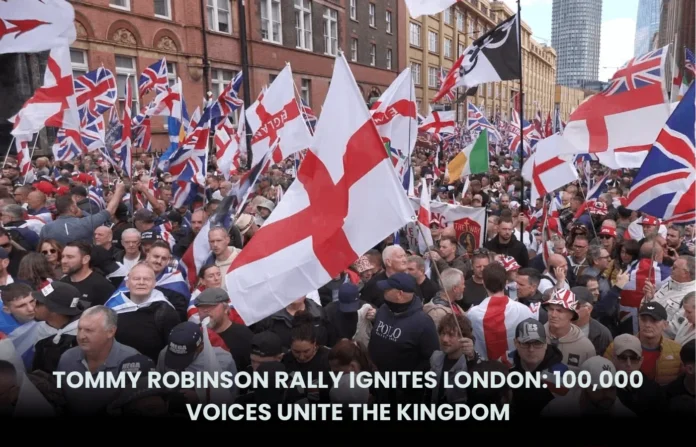
Imagine standing on the banks of the River Thames on a crisp autumn morning, the air thick with the rumble of chants echoing off historic bridges. Flags snap in the wind—bold reds, whites, and blues—while a sea of faces, young and old, mostly men with the hardened gaze of lifelong supporters, pulses with raw energy. This isn’t just another protest; it’s a reckoning.
Today, September 13, 2025, London has become the epicenter of a movement that’s been simmering for years, boiling over in the wake of tragedy. The Tommy Robinson rally, billed as “Unite the Kingdom,” has drawn what police estimate at over 100,000 people, turning Whitehall into a throbbing heart of defiance. It’s a sight that would make your pulse quicken, whether you’re cheering from the front lines or watching warily from afar. But beneath the spectacle lies a deeper story—one of grief, grievance, and a nation grappling with its identity.
What starts as a call for free speech quickly spirals into something more visceral: a cry against immigration, Islam, and what organizers see as a betrayal of British values. Tommy Robinson, the firebrand at the helm, isn’t pulling punches. Fresh out of prison and fueled by the shocking assassination of American conservative icon Charlie Kirk just days ago, he’s turned this rally into a global flashpoint. As crowds swell and counter-protesters clash nearby, one question hangs heavy: Is this the spark that ignites lasting change, or just another flare-up in Britain’s polarized streets?
What Fuels the Fire: Unpacking the Tommy Robinson Rally’s Core Message
At its heart, the Tommy Robinson rally isn’t about vague platitudes—it’s a blunt confrontation with what Robinson calls the “invasion” of Britain. Picture this: a former football hooligan turned activist, Stephen Yaxley-Lennon (Robinson’s real name), stepping onto a stage flanked by massive screens replaying clips of border crossings and heated debates. He’s been here before, but never on this scale. Organizers promised the largest far-right gathering in decades, and by midday, the numbers bore that out—tens of thousands snaking from Waterloo Station toward Parliament Square, their voices a thunderous roar of “Tommy! Tommy!”
Robinson’s pitch is simple yet seductive: Britain is under siege. Immigration policies, he argues, have eroded the fabric of a once-proud nation, prioritizing newcomers over natives. “We’ve built this country,” he bellowed in a pre-rally video, his voice gravelly from years of street-level activism. “And now they’re telling us we can’t speak up?” It’s rhetoric that’s resonated deeply, especially in towns hit hard by economic shifts and cultural changes. Think of places like Luton, Robinson’s hometown, where he first cut his teeth protesting what he saw as “no-go zones” dominated by Muslim communities.
But let’s zoom out. This isn’t isolated fury. The Tommy Robinson rally taps into a broader undercurrent of discontent. Polls show Reform UK, the anti-establishment party led by Nigel Farage, surging ahead in voter intentions—topping charts with promises to deport hundreds of thousands. Farage, a Trump ally, has echoed Robinson’s calls, framing immigration as an existential threat. It’s no coincidence that English flags now flutter from lampposts in quiet suburbs, symbols of patriotism to some, harbingers of division to others. I’ve spoken with locals over the years—working-class blokes nursing pints in pubs—who nod along, sharing stories of strained schools and hospitals. “It’s not hate,” one told me last week, eyes earnest. “It’s survival.”
Tommy Robinson’s Journey: From Streets to Spotlight
To understand the rally, you have to trace Robinson’s path—it’s a tale as gritty as a Luton alleyway brawl. Born in 1982, he grew up in a council estate, bouncing between jobs as a bricklayer and aircraft engineer. By his early 20s, he’d dipped into the British National Party (BNP), that old-guard fascist outfit, before breaking away to co-found the English Defence League in 2009. The EDL was raw street theater: marches against “Islamist extremism,” fueled by soccer chants and pub energy. Robinson led the charge, his bald head and bullhorn becoming icons of resistance.
Legal troubles shadowed him—convictions for mortgage fraud, assault, and contempt of court landed him in prison multiple times. Released in May 2025 after an 18-month stint, he emerged leaner, sharper, and more media-savvy. Social media is his megaphone now; X posts rack up millions of views, blending outrage with humor. “No masks, no booze, no violence,” he urged followers ahead of the Tommy Robinson rally. “Just stand proud.” It’s a savvy pivot, distancing from past riots while amplifying the message. Yet critics, like those at anti-extremism watchdog Hope Not Hate, warn it’s a wolf in sheep’s clothing—same old hate, repackaged for the TikTok era.
The Spark That Lit the Fuse: Charlie Kirk’s Assassination and Its Ripples
Nothing propels a movement like martyrdom, and the killing of Charlie Kirk has handed Robinson a potent symbol. Just 48 hours before the rally, the 31-year-old Turning Point USA founder was gunned down mid-speech at a Utah university event—shot in what authorities call a targeted hit, possibly tied to his hardline conservatism. Kirk, a father of two and darling of the American right, wasn’t just a pundit; he was a bridge to global networks, rubbing shoulders with Trump insiders and European populists.
Robinson seized the moment. “In honor of Charlie Kirk and freedom, we march,” he posted on X, a video montage of Kirk’s fiery talks intercut with London streets. By Friday night, a vigil in central London drew hundreds, candles flickering as speakers decried “deep state” conspiracies—echoing Robinson’s own rants about shadowy forces behind the murder. It’s chilling how quickly grief morphs into fuel. One attendee, a middle-aged dad from Essex clutching a faded Kirk poster, shared with me: “Charlie was us—fighting the elites. Tommy gets it.” That raw emotion? It’s what turns a rally into a ritual.
Experts like Dr. Matthew Goodwin, a politics professor who’s chronicled the far-right’s rise, see this as textbook mobilization. “Tragedy humanizes the cause,” he told me in a recent chat. “Kirk’s death isn’t just news; it’s a call to arms, linking American culture wars to British streets.” Goodwin’s books, like *Values, Voice and Virtue*, chart how economic anxiety and identity fears breed these bonds. And with Reform UK polling at 35%, it’s clear the Tommy Robinson rally isn’t an outlier—it’s a symptom.
Echoes from the Past: The Evolution of Britain’s Far-Right Street Scene
Britain’s far-right isn’t new; it’s a phoenix, rising from ashes of old battles. Rewind to the 1970s: the National Front’s marches through immigrant neighborhoods sparked the Battle of Cable Street, where Jewish and Irish locals clashed with Oswald Mosley’s blackshirts. Fast-forward to the 2000s, and enter the BNP, peddling “rights for whites” in council elections.
Robinson’s EDL marked a shift—less suits, more sneakers. Born from 2009’s grooming gang scandals in Luton, it framed Islam as the enemy, drawing football lads with terrace anthems repurposed for protests. Rallies ballooned: 2010’s Trafalgar Square demo pulled 5,000, chants of “EDL! EDL!” drowning out counter-demos. But infighting and scandals fractured it; Robinson quit in 2013, citing “extremist” influences, only to rebrand as a solo act.
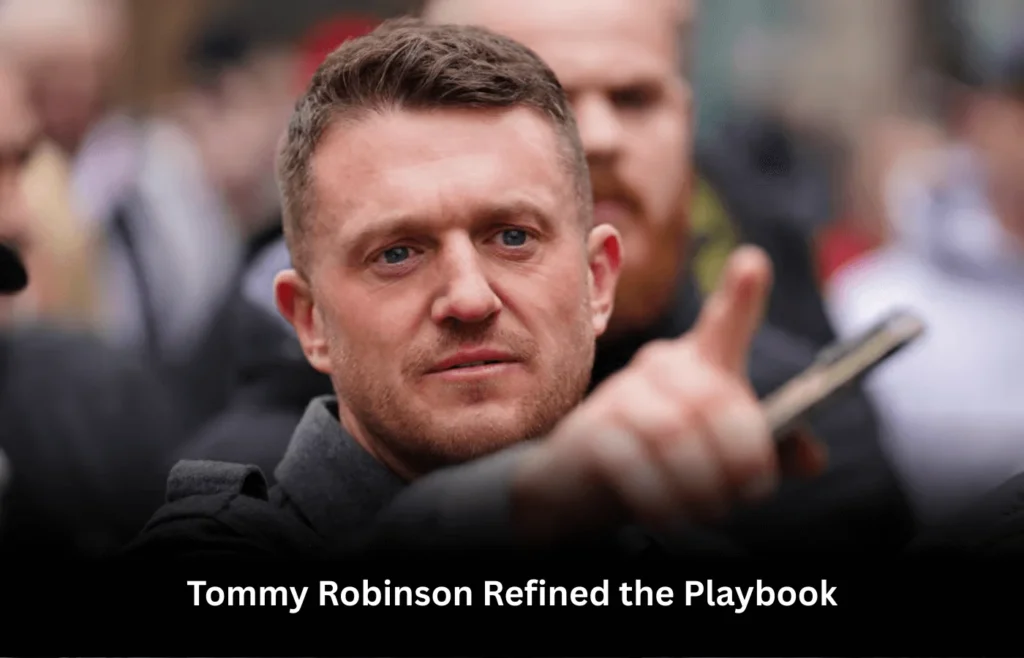
Lessons from the EDL: How Tommy Robinson Refined the Playbook
The EDL’s legacy lingers in today’s Tommy Robinson rally—same energy, upgraded optics. Back then, beer-fueled scuffles alienated moderates; now, Robinson preaches peace, live-streaming to dodge bad press. Yet patterns persist: mostly white, male crowds, ages 20-50, blending genuine concern with ugly undercurrents. A 2024 Hope Not Hate report tallied over 40 violent incidents at Robinson-linked events, from bottle-throwing to mosque attacks.
I’ve covered these beats for years, from rain-soaked demos in Birmingham to sun-baked standoffs in Manchester. One sticks: a 2018 Leeds march where a young counter-protester, barely 19, got shoved into a wall by EDL stragglers. “They say it’s about freedom,” she gasped later, bruised but unbowed. “Feels more like fear.” That duality—passion laced with peril—defines it all.
Chaos on the Streets: How the Tommy Robinson Rally Unfolded Today
By 10 a.m., the buildup was electric. Crowds funneled from Blackfriars Bridge, a human river of St. George’s crosses and “Stop the Boats” banners. Robinson, hoarse but commanding, took the stage near noon, dedicating the event to Kirk: “They killed him for speaking truth. We won’t be silenced.” Cheers erupted, a wall of sound that vibrated through your chest.
But harmony cracked early. Reports trickled in of scuffles—projectiles lobbed at police lines, officers in riot gear forming human barriers. The Met deployed 1,600, their blue lines a stark contrast to the flag-waving throng. Five Premier League matches overlapped, adding irony: the “football lads” Robinson summoned were here, but so were away fans eyeing the chaos warily. Social media lit up—X posts showed Israeli flags waving oddly amid anti-Islam chants, sparking online fury. One viral clip: a Palestinian flag torn amid jeers, polarizing even supporters.
As the afternoon wore on, speakers amplified the heat. Steve Bannon, Trump’s ex-strategist, thundered about “globalist plots,” his American twang cutting through the Brit accents. Jordan Peterson, the Canadian psychologist, urged intellectual resistance: “Stand for reason, or lose your soul.” A German AfD lawmaker and French firebrand rounded out the international flair, turning the Tommy Robinson rally into a Euro-populist powwow. By dusk, estimates hit 110,000—Robinson claimed millions, but footage tells a crowded truth.
Standing Against the Tide: Counter-Protests and the Pushback
No rally exists in a vacuum, and today’s Tommy Robinson rally faced fierce opposition. Just blocks away, Stand Up to Racism mustered thousands—placards screaming “Refugees Welcome” and “Oppose Tommy Robinson.” Led by MPs Zarah Sultana and Diane Abbott, it was a rainbow coalition: trade unionists, students, faith leaders linking arms in defiance.
Tensions flared at intersections, where rival chants collided like storm fronts. Police kettled hotspots, but arrests mounted—dozens for public order breaches, echoing last weekend’s 900 nabbed at a Palestine Action demo. That group, banned as terrorists in July alongside Al-Qaeda, highlights the stakes: direct action now risks 14 years inside. “It’s a slippery slope,” says Imam Ajmal Masroor, a community leader I’ve quoted before. “Label dissent terror, and suddenly vigils become crimes.”
Met Commander Clair Haynes struck a reassuring note pre-event: “Muslim Londoners, don’t change your plans. London’s for everyone.” Yet incidents marred that ideal—offensive chants from a “minority,” per police, but enough to spike fear. One Muslim shopkeeper near Trafalgar Square shuttered early, telling BBC: “Heard the chants last time. Not risking it.”
Global Spotlights and Domestic Storms: Speakers Who Shaped the Day
The lineup elevated the Tommy Robinson rally beyond local gripes. Bannon’s set was pure fire—30 minutes on “sovereignty wars,” drawing parallels to Brexit’s unfinished business. Peterson followed, his measured tone a counterpoint: analogies to lobster hierarchies underscoring “natural hierarchies” in society. Joey Mannarino, the U.S. commentator, kept it punchy: “Charlie’s blood is on their hands—fight back!”
International voices added gravitas. The AfD’s rep railed against EU migration pacts; a Hungarian firebrand invoked Orbán’s border walls. It’s a transatlantic echo chamber, where Kirk’s death bridges oceans. As one X user quipped amid live streams: “From Utah to Whitehall—freedom’s funeral procession.”
But not all was seamless. Advance UK’s leader dropped an F-bomb on Starmer from the stage, eliciting laughs but underscoring the fringe edge. Robinson wrapped with a plea: “No riots. Just resolve.” Yet as night fell, isolated assaults on officers—bottles, fists—tested that vow.
Beyond the Banners: What the Tommy Robinson Rally Signals for Tomorrow
As the crowds disperse, the real questions linger. This Tommy Robinson rally wasn’t just noise; it was a barometer. With Reform UK eyeing election wins and Farage musing mass deportations, nationalism feels mainstream. Symbols like those omnipresent flags? They’re reclaiming space, but at what cost? In my years chasing these stories—from EDL scrums to today’s spectacle—I’ve seen unity fracture into isolation.
Experts diverge. Goodwin predicts a “values realignment,” where working-class voters demand voice. Hope Not Hate’s Nick Lowles counters: “It’s emboldening thugs—watch hate crimes spike.” Either way, today’s 100,000-strong show proves one thing: the far-right’s pulse beats strong.
For the everyday Londoner, it’s a mixed bag. Pubs buzzed with debate—some toasting “Tommy’s triumph,” others decrying “hooligan hour.” One barmaid, wiping glasses amid the din, shrugged: “City’s always marched. Question is, where to next?”
If history’s any guide, the answer’s in the follow-through. Robinson’s vowed more—festivals, not fights. But with Kirk’s shadow looming and polls tilting right, the Tommy Robinson rally might just be Act One. Share this if it stirred you; Britain’s crossroads demands witnesses.
